
Last reviewed: October 2026. This article is general information, not legal or financial advice. Your governing documents and local law decide what your fees must cover.
Every month or quarter, millions of owners send money to an association they rarely think about until something goes wrong. In the United States alone, the Census Bureau’s 2024 American Community Survey found that about 21.6 million of the country’s 86.6 million owner-occupied households paid a condo or HOA fee. The national median was $135 a month, but the spread is enormous: about 26% of those homes paid less than $50, while roughly 3 million paid more than $500 (U.S. Census Bureau).
That spread is the whole story. Two owners can both say “I pay HOA fees” and be paying for completely different things. One is chipping in for a gate and some lawn mowing. The other is funding a doorman, a boiler, an elevator, the building’s insurance and a savings account for a roof that will need replacing in 2034.
So the useful question isn’t “what do HOA fees cover?” in the abstract. It’s “what do my fees cover, and is the money being split sensibly between today’s bills and tomorrow’s repairs?” Here is how to work that out.
The two jobs every fee does
Whatever your association is called (HOA, condo association, co-op, strata corporation, owners corporation, or in Finland a taloyhtiö), the regular charge does two jobs. It pays the running costs of the year, and it puts money aside for big, predictable repairs later.
The Foundation for Community Association Research, the research arm of the Community Associations Institute, puts it in similar terms: assessments support day-to-day operations, professional services such as management, legal, audit and insurance, amenities, and reserves for planned capital repairs (CAI Foundation). Its 2025 figures show U.S. associations collected $124.2 billion in assessments, of which $31.1 billion went into reserve funds (2025 Statistical Review). Roughly a quarter, in other words, was saved rather than spent.
Keep that split in mind. When fees rise, the first thing to check is which half went up.
What the operating budget usually pays for
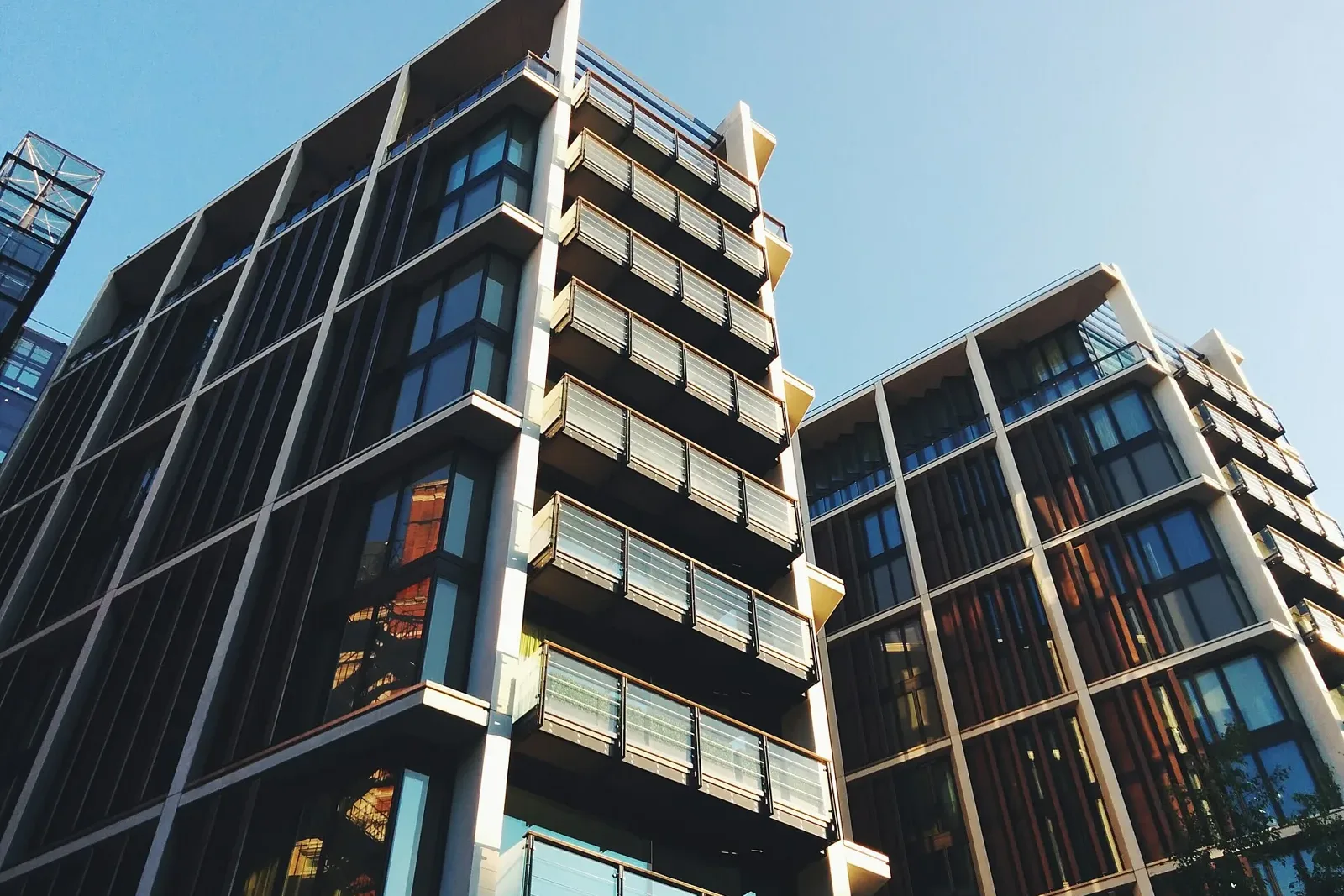
The operating side is the part you can see. In a typical suburban HOA of detached houses it might be little more than landscaping of common areas, street lighting, a pool, snow removal, insurance on the clubhouse and a management company. In a mid-rise condo building it is much heavier, because the association owns and runs the structure itself.
A realistic condo operating budget will include most of the following: building insurance (often the single largest line now), water and sewer if it is billed to the building, common-area electricity and heating, cleaning, elevator maintenance contracts, fire alarm and sprinkler testing, trash and recycling, the management fee, accounting and the annual audit or review, legal fees, and a small contingency. Some buildings also cover heating and hot water for every unit, cable or internet, concierge staff and on-site maintenance workers.
This is why the Census Bureau notes that condo fees tend to be higher than HOA fees: condo fees “cover more shared services and structural features like roofs and hallways.” When you compare two buildings, compare what is included, not just the number. A $650 fee that includes heat and hot water in a cold climate can be cheaper in real terms than a $450 fee that doesn’t.
The reserve fund: the part people underrate
Reserves are the money set aside for components that wear out on a schedule: roofs, boilers, elevators, windows, balconies, paving, pipes. They are boring until they are missing, and then they become the most expensive line in your life as an owner.
Most of the English-speaking world has moved toward requiring a proper plan for this money. California requires boards to have a reserve study, with a visual inspection at least every three years and an annual review (Cal. Civil Code §5550). Ontario condominiums must keep a reserve fund backed by a reserve fund study with a 30-year funding plan (Condo Authority of Ontario). In New South Wales, owners corporations run a capital works fund and a 10-year capital works fund plan that must be reviewed at least every five years (NSW Government).
Mortgage rules push in the same direction. For a full review of a U.S. condo project, Fannie Mae generally expects the association’s budget to allocate at least 10% of annual assessment income to replacement reserves, and special assessment income does not count toward that figure (Fannie Mae Selling Guide). That 10% is a lender’s floor, not a target. An older building with original windows and a 30-year-old roof may need far more.
My practical rule when reading a budget: if the reserve contribution has stayed flat for several years while everything else went up, someone has been keeping fees low by borrowing from the future. That bill arrives later as a special assessment.
What fees usually do not cover
The line between “the association’s problem” and “your problem” is drawn by your declaration, bylaws, lease or strata plan, and it varies more than owners expect. In many condos the association insures and repairs the walls, roof and shared pipes, while you are responsible for everything from the drywall in: flooring, cabinets, fixtures, appliances and your own belongings. That gap is what a condo unit-owner policy (in the U.S., an HO-6) is designed to fill.
Fees also don’t normally cover your property tax, your own utilities if units are separately metered, or improvements inside your unit. And they won’t cover a major repair the reserves can’t pay for. That is what special assessments are for, and they sit on top of your regular fee.
How it works outside the U.S.
The vocabulary changes; the logic doesn’t.
England and Wales. Most flat owners are leaseholders paying a service charge to a freeholder or management company. The lease sets out what can be charged, which typically includes buildings insurance, repairs to the structure and common parts, cleaning, lighting and management fees. Some leases also allow a reserve or sinking fund (Leasehold Advisory Service). Leaseholders have statutory rights to challenge unreasonable charges, and the landlord must consult before major works that would cost any one leaseholder more than £250 (GOV.UK).
Australia. Strata owners pay levies into two pots: an administrative fund for running costs and a capital works fund (called a sinking fund in some states) for long-term repairs. In NSW, levies are set at the annual general meeting and divided by unit entitlement (NSW Government).
Canada. Condo fees in Ontario and strata fees in British Columbia work much like U.S. condo fees, with a legally required reserve or contingency fund. In B.C., strata corporations with five or more lots must obtain a depreciation report forecasting 30 years of repair costs (Government of British Columbia).
Finland and the Nordics. In a Finnish housing company, the monthly hoitovastike pays running costs, and large renovations such as pipe replacement are often financed with a loan taken by the housing company, which owners repay through a rahoitusvastike (formally a pääomavastike, or capital charge). The two are set out in the company’s articles and decided at the general meeting, and they have to be kept apart in the books, so the capital charge pays only for long-term costs such as construction, major repairs and renovation (Kiinteistöliitto; Limited Liability Housing Companies Act 1599/2009, ch. 3). It is a useful model to know about, because it makes the cost of big projects visible line by line instead of hiding it inside one number.
How to read your own association’s budget
You don’t need to be an accountant. Ask for three documents: the current annual budget, the most recent reserve study or capital plan, and last year’s financial statements. Then look for a few things.
First, the share going to reserves. Divide the annual reserve contribution by total assessment income. In the U.S., under 10% is a warning sign for any building that wants to stay mortgage-friendly. Second, the funding level in the reserve study. Studies often express this as “percent funded”; a low number in an older building means big repairs are coming without the cash to pay for them. Third, insurance. Has the premium jumped, and has the deductible gone up? In plenty of buildings the master policy deductible has climbed, and owners can be assessed for it. Fourth, delinquencies. If a noticeable share of owners aren’t paying, everyone else is covering the gap.
Then go to a board meeting, or at least read the minutes. Budgets tell you what the board planned. Minutes tell you what actually happened.
Are high fees bad?
Not necessarily. A high fee in a building with a well-funded reserve, current insurance and a clear capital plan is often better value than a low fee in a building that has been putting off repairs. Buyers who choose the cheapest fee in the market sometimes pay the difference a few years later in one lump.
The fee you should worry about is the one nobody can explain. If the board or manager can’t tell you what your money pays for and how the reserves are tracking against the plan, that is the problem to fix, at the ballot box if necessary.
Frequently asked questions
What is the average HOA fee?
In the U.S., the Census Bureau reported a national median of $135 a month for homeowners paying a condo or HOA fee in 2024, with wide variation by state. In New York, 64% of fee-paying owners reported paying more than $500 a month (Census Bureau).
Are HOA fees optional?
No. CAI’s research foundation stresses that assessments are mandatory obligations created by the governing documents you accept when you buy, unlike voluntary club “dues.” Unpaid assessments can lead to late fees, liens and, in some jurisdictions, foreclosure.
Do HOA fees cover home insurance?
Usually only partly. The association insures the common property and, in many condos, the building structure. Your belongings, your liability and often the interior of your unit need your own policy. Check your governing documents and the master policy to see where the line is.
Can my HOA raise fees whenever it wants?
That depends on your documents and state or provincial law. California, for example, generally lets a board raise regular assessments by no more than 20% a year without a vote of the owners (Cal. Civil Code §5605), while jurisdictions such as NSW require levies to be approved at a general meeting. Look for the budget and assessment section of your bylaws.
What is the difference between fees and a special assessment?
Regular fees fund the annual operating budget and reserves. A special assessment, called a special levy in Australia, is a one-off charge when reserves or insurance fall short of a specific cost.
Can I deduct HOA fees from my taxes?
For a home you live in, generally not in the U.S. For a rental property, they are typically a deductible expense. Rules differ by country, so check with a local tax adviser.
Featured image: DimiTalen via Wikimedia Commons, CC0.