
Last reviewed: October 2026. General information, not insurance or legal advice. Policy wording varies by insurer and country, so read your own policy and talk to a licensed agent or broker.
Condo insurance confuses people for a simple reason: two policies cover one home, and neither of them is fully yours. The association, strata corporation or owners corporation insures the building. You insure what’s left. The trouble is that “what’s left” depends on documents most owners have never read, and the gaps tend to show up on the worst possible day, usually with water coming through the ceiling.
In the U.S. the owner’s policy is commonly called an HO-6, after the standard unit-owners form. Canada, the UK and Australia use different names but the same basic logic. Here is what an HO-6 does, where owners get caught out, and how to work out how much cover you actually need.
Two policies, one home
Washington State’s insurance regulator describes the setup clearly: one policy is the owner’s HO-6, the other is the community’s master policy paid for through owner dues, and “these two policies work in tandem to cover losses inside and outside an owner’s individual unit” (Washington Office of the Insurance Commissioner).
The master policy covers the shared structure and common property. How much of your unit it covers depends on its type and on the governing documents. Some master policies stop at the bare walls. Others cover original fixtures and finishes, such as the builder’s kitchen cabinets and flooring, but not anything you or a previous owner upgraded. A few cover almost everything except your belongings.
So step one is not shopping. It’s reading. Get a copy of the declarations or bylaws section on insurance and maintenance, and the current master policy summary from your manager. You’re looking for three facts: where the master policy’s coverage of your unit ends, what its deductible is, and when owners can be charged that deductible.
What a typical HO-6 includes
Most HO-6 policies are packages. The Washington regulator lists the usual parts: coverage for the parts of the unit you’re responsible for under the governing documents, personal liability, medical payments to others, additional living expenses if the unit becomes unlivable after a covered loss, personal property, and loss assessment.
Dwelling or “building property” coverage pays to repair the parts of the unit the association doesn’t insure. If your master policy is “bare walls,” this needs to be large enough to rebuild the entire interior: drywall, flooring, kitchen, bathrooms, built-ins. If it’s an “all-in” master policy, you may only need enough for your own upgrades.
Personal property covers your belongings. Check whether it pays replacement cost or actual cash value; the regulator notes that contents cover is often based on actual cash value, which deducts for age and wear, and that items like jewelry often have low sub-limits unless you add an endorsement.
Liability protects you if someone is hurt in your unit, or if a leak you’re responsible for damages the unit below. In a building, that second scenario is far more likely than a slip-and-fall.
Loss of use pays the extra cost of living elsewhere while repairs are done. After a fire or a major leak, condo repairs can take months because they depend on the association’s contractors as well as yours.
Loss assessment is the one most people ignore, and it deserves its own section.
Loss assessment: the cheapest coverage you are probably short on
If the association suffers a loss that the master policy doesn’t fully pay, whether because of the deductible or because the damage exceeds its limits, the shortfall can be passed to owners as an assessment. Loss assessment coverage pays your share, within limits.
On the standard ISO HO 00 06 form, that coverage is just $1,000 per loss, and it applies only when the assessment results from a direct loss to collectively owned property caused by a peril the policy would cover for you. Assessments charged by a government body are excluded (ISO HO 00 06 form). A higher limit can be added by endorsement (PropertyCasualty360). One detail to check closely: whether your policy’s loss assessment coverage will pay toward the association’s deductible. Recent ISO editions allow it under the increased coverage, but older editions and many insurers’ own forms don’t (IA Magazine).
Why it matters: master policy deductibles are often large. In British Columbia, the provincial government warns that strata deductibles “can range from $100,000 to $750,000 or higher,” and that an owner can be required to pay it if a claim starts in their unit, even when they weren’t negligent. Its example is a dishwasher hose that bursts and floods other units (Government of B.C.; Strata Property Act, s. 158).
My advice is blunt: find out your building’s deductible, then make sure your loss assessment or deductible coverage is at least that high, or as close as your insurer allows. It’s typically one of the cheaper add-ons, and it’s the one that saves owners from five-figure bills.
How it works in Canada, Australia and the UK
Canada. The Insurance Bureau of Canada describes the same two-policy model. The corporation’s policy typically covers the buildings, common property, original fixtures and the corporation’s liability; the unit owner’s policy covers personal property, additional living expenses, personal liability, upgrades made by current and previous owners, “contingency” coverage if the corporation’s insurance falls short, and loss assessment (Insurance Bureau of Canada). The IBC also lists optional add-ons worth asking about, including sewer backup, overland water and earthquake coverage.
Australia. In NSW, strata building insurance is mandatory. The owners corporation must hold a damage policy on the building, and that policy includes owners’ fixtures and improvements forming part of the building, along with mandatory public liability cover (the Act sets a $10 million floor, or a higher amount if the regulations prescribe one) (SSMA 2015 s.161; s.164). Contents are not the owners corporation’s responsibility, and the NSW government notes that furniture, appliances, curtains and carpets may not be covered even when the damage comes from common property (NSW Government). Owners there usually buy contents insurance, or landlord insurance if they rent the unit out.
United Kingdom. Leasehold flat owners typically pay for buildings insurance through the service charge, arranged by the freeholder or management company under the lease. The owner’s own policy is normally contents insurance, ideally with cover for the leaseholder’s own improvements and for liability. Ask for the building policy schedule; you’re entitled to know what it covers and what the excess is.
How much coverage do you need?
There’s no single answer, but you can get close with a short exercise.
For dwelling coverage, start from your governing documents. If you are responsible for everything from the studs in, estimate the cost of rebuilding the interior at today’s contractor prices, not what you paid. If the association covers original finishes, total up your upgrades instead. Your agent can help, but come with numbers.
For personal property, do a quick room-by-room estimate. Most people underestimate this badly. B.C.’s guidance points out a difference worth remembering: a house policy often sets contents as a percentage of the house, but a condo policy usually asks you for a dollar figure.
For loss assessment, match the master policy deductible if you can, and consider more in an older building where an underfunded reserve could lead to an uninsured shortfall.
For liability, most agents will suggest at least the mid-range limit. In a multi-storey building, think about what happens if your leak damages three units below you.
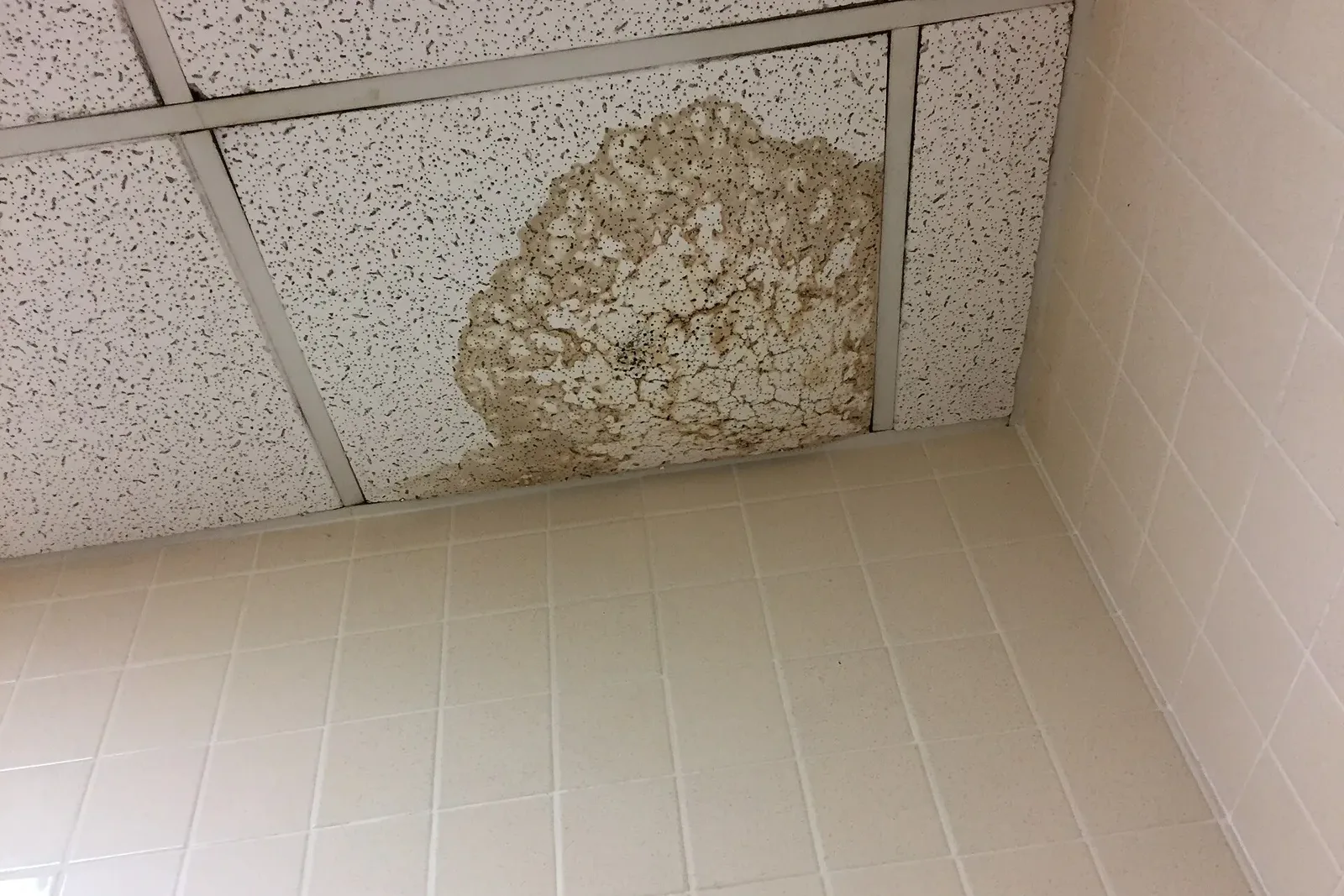
And look hard at water, because in a stacked building one failed hose rarely damages only one home. Ask whether your policy covers sudden leaks, sewer backup and, where relevant, overland flooding, and what the exclusions are for slow leaks and maintenance failures.
A small, practical step that insurers and boards both like: fit water leak sensors under the sink, behind the toilet, by the water heater and beside the washing machine. Some insurers offer discounts for them. Even without one, catching a leak in minutes rather than hours can be the difference between a towel and a claim.
Common mistakes
Buying a policy before reading the governing documents. Assuming the master policy covers “the building” in the sense of your kitchen. Keeping the default $1,000 loss assessment in a building with a $50,000 deductible. Forgetting to update dwelling coverage after a renovation. And, for landlords, keeping an owner-occupier policy after renting the unit out, which can create problems at claim time. Tell your insurer, and ask your tenant to carry renters insurance.
Frequently asked questions
Is HO-6 insurance required?
Not by law in most places, but many mortgage lenders and some associations require it. Even where it’s optional, an owner without one can be personally exposed to interior repair costs, liability claims and assessments.
What’s the difference between HO-6 and renters insurance?
Renters insurance (HO-4 in the U.S.) covers a tenant’s belongings and liability. HO-6 adds coverage for the parts of the unit the owner is responsible for, plus loss assessment.
Does HO-6 cover the association’s deductible?
Sometimes. It depends on your policy form and endorsements. Check whether your loss assessment or a specific deductible-assessment endorsement applies to master policy deductibles, and what limit it carries.
Does condo insurance cover water damage from the unit above?
Often, for sudden and accidental leaks, subject to your deductible and the policy terms. The upstairs owner’s liability coverage or the master policy may also be involved. Report it quickly and photograph everything.
How much does HO-6 insurance cost?
It varies widely by location, building, coverage limits and claims history. Get several quotes for the same coverage limits so you’re comparing like with like.
Featured image: chuttersnap chuttersnap via Wikimedia Commons, CC0.